HOUSTON (AP) — The Artemis II astronauts are now forever intertwined with Apollo 8.
A day after the historic lunar flyaround, NASA on Tuesday released striking new photos taken by the U.S.-Canadian crew.
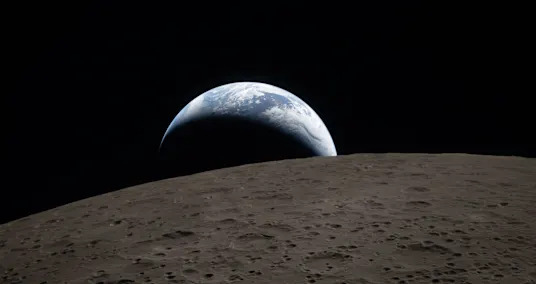
The four astronauts channeled Apollo 8’s famous Earthrise shot from 1968 with their own: Earthset, showing our planet setting behind the gray, pockmarked moon. Another photo captures the total solar eclipse that occurred when the moon blocked the sun from the crew’s perspective.
The three Americans and one Canadian are now headed home, with a splashdown in the Pacific set for Friday. In the meantime, scientists at Houston's Mission Control are poring over the stream of moon photos beaming down.
Apollo 8's three astronauts became the world's first lunar visitors, orbiting the moon on Christmas Eve 1968. Their Earthrise shot became a symbol of the modern-day environmental movement.
Artemis II marks NASA's first return to the moon with astronauts — a critical step toward a lunar landing by another crew in two years.
___
The Associated Press Health and Science Department receives support from the Howard Hughes Medical Institute’s Department of Science Education and the Robert Wood Johnson Foundation. The AP is solely responsible for all content.
latest_posts
- 1
 How to sound like an astronaut as you follow the first human moon mission in more than half a century
 - 2Conquering Social Generalizations: Individual Accounts of Strengthening
- 3Most loved Web-based feature: Which Stage Do You Like
- 4Figure out How to Recognize the Right Areas for 5G Pinnacles\
- 5What's going around right now? COVID, flu, stomach bug on the rise





- Most loved Occasion Dish: What Makes Your Merry Table?
- Step by step instructions to Boost the Eco-friendliness of Your Smash 1500.
- Vote In favor of Your Favored Shimmering Water
- French Senate debates social media ban for under-15s
- 5 Indoor Plants That Further develop Air Quality
- Weather forecast, Turkana style: A goat's intestines tell it all
- The Significance of Prenuptial Arrangements in Separation Procedures
- What to know about voluntary chocolate recall
- Israel says it will keep control over part of southern Lebanon after war with Hezbollah ends