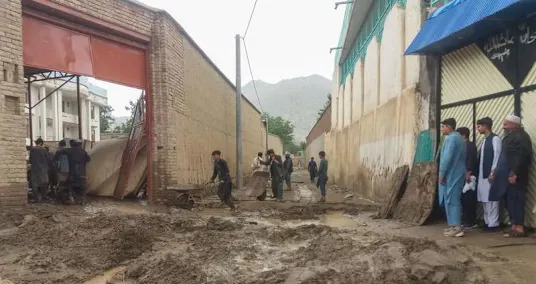
At least 61 people have been killed and 116 injured across Afghanistan since March 26 due to heavy rainfall, floods, landslides and lightning strikes, the Afghan government said on Saturday.
At least four people were still missing after floods affected thousands of families and damaged 2,448 houses, Afghan government spokesman Zabihullah Mujahid said in a post on X.
In addition, thousands of hectares of cropland was also destroyed, posing serious risks to rural communities who rely on agriculture for their livelihoods.
Deadly flooding has struck Afghanistan repeatedly in recent years, causing significant loss of life, injuries and widespread damage to homes, infrastructure and agricultural land.
Extreme weather events such as flash floods and droughts are increasing in Afghanistan, which experts link to the climate crisis.
Despite having a negligible carbon footprint, the country ranks among the most climate-affected nations and remains ill-prepared to cope after decades of conflict, poor infrastructure and a struggling economy, compounded by recent earthquakes and severe flooding.
latest_posts
- 1
 ByHeart baby formula from all lots may be contaminated with botulism bacteria, tests show
 - 2Chris Noth responds to backlash after seemingly shading 'Sex and the City' costar Sarah Jessica Parker: 'It is not news'
- 3Investigate Business Mastercard Choices for Better Rewards and Rewards
- 4The most effective method to Guarantee Simple Availability in Seniors' SUVs
- 57 Extraordinary Efficiency Applications for Experts


- Figuring out the Justification for Separation: To blame and No-Shortcoming
- 'Harry Potter' fans rejoice: HBO releases 1st trailer for new TV series, set to premiere this Christmas
- Black Friday streaming deals 2025: Grab the Disney+ Hulu bundle for only $5 and save over 60%
- 'We are ready': NASA still on track to launch Artemis 2 astronauts to the moon April 1
- Fundamental Archives for Beginning Your Business
- NASA, in a rare move, cuts space station mission short after an astronaut's medical issue
- James Webb Space Telescope spies mysterious high-energy radiation in star nursery
- Images of Bangladeshi motorcyclists sleeping at petrol pumps are AI-generated
- Kremlin: Russian troops conquer Pokrovsk after year of intense combat